
What is The Largest Rodent in Colorado?
The largest rodent in Colorado is the North American beaver. Adult beavers grow to more than three feet long and weigh up to 55 pounds, according to Colorado Parks and Wildlife. The porcupine is a distant second at up to 33 pounds, and the smallest rodents on the list, house mice and deer mice, weigh less than an ounce.
The rodents most likely to cause trouble inside a Colorado home are the small ones at the bottom of this ranking: rats and mice. Wolfco Pest Control helps homeowners find where rats and mice are getting in, remove the ones already inside, and seal up entry points so they stay out. Learn more about our rodent control service.
Colorado Rodents Ranked by Size
Colorado's common rodents range from 55-pound beavers down to half-ounce house mice. The rankings below are ordered by top adult weight, since weight is a more reliable measure of size than length. Tails throw length numbers off, which is why a 2-pound muskrat can measure about as long as an 11-pound marmot.
Scale is approximate and based on the upper end of each species' typical adult length. Individual animals vary.
1. North American Beaver: Colorado's Largest Rodent
The North American beaver is the largest rodent in Colorado and the largest native rodent in North America. Colorado Parks and Wildlife lists adult beavers at more than three feet long and up to 55 pounds, with a broad, flat tail and webbed feet. The Colorado Encyclopedia puts the average adult closer to 40 to 50 pounds and about 48 inches long.
Beavers live throughout Colorado wherever there is suitable water, and they are most abundant in the subalpine zone. CPW notes a beaver can drop a 5-inch-diameter tree in roughly 30 minutes. Homeowners along creeks and ponds usually notice gnawed aspen, willow, or cottonwood long before they see the beaver itself.
2. Porcupine: Colorado's Second-Largest Rodent
The porcupine is the second-largest rodent in Colorado, behind only the beaver. Colorado Parks and Wildlife describes adults as 27 to 32 inches long, about 10 inches of which is tail, and up to 33 pounds. Porcupines live in wooded and brushy habitat statewide and are most common in ponderosa and pinyon pine woodlands.
Myth Check
Porcupines cannot throw or shoot their quills. According to CPW, a threatened porcupine spins and slaps with its tail, and the barbed quills work into whatever they touch. A single porcupine carries between 15,000 and 30,000 quills, so dogs that get too curious on Colorado trails tend to learn this the hard way.
3. Yellow-Bellied Marmot: The Largest Ground Squirrel in Colorado
The yellow-bellied marmot ranks third among Colorado rodents at about 26 inches long and up to about 11 pounds, per Colorado Parks and Wildlife. Marmots are heavy-set and grizzled brown with a yellowish belly, and their long fur makes them look even bigger in the fall. Most people picture marmots on high alpine trails, but CPW notes they also live in suitable rocky habitat down into the lower foothills. Marmots den deep beneath boulders and can lose up to half their summer weight while hibernating.
4. Prairie Dogs: Colorado's Colony Builders
Colorado has three prairie dog species, and all of them weigh between 1.5 and 3.5 pounds. Colorado Parks and Wildlife lists the sizes this way:
- White-tailed prairie dog: 1.75 to 3.5 pounds and 12 to 16 inches long, found in North Park, the Wyoming Basin, and the Grand and Uncompahgre valleys.
- Black-tailed prairie dog: 1.5 to 3 pounds and 14 to 17 inches long, found on the eastern plains.
- Gunnison's prairie dog: 1.5 to 2.5 pounds and 12 to 14 inches long, found in the San Luis Valley, Gunnison Valley, South Park, and areas south and west.
Prairie dog burrows can run up to 7 feet deep and 16 feet long, according to CPW. Black-tailed prairie dogs are the most colonial of the three, which is why their towns are so noticeable along the Front Range and eastern plains.
5. Muskrat: The Rodent Most Often Mistaken for a Beaver
The muskrat is not a young beaver. It is an oversized, semi-aquatic vole. Colorado Parks and Wildlife puts adult muskrats at about 26 inches long, including a 9-inch tail, and about 2 pounds. That makes a muskrat roughly as long as a marmot at a fraction of the weight.
The easiest way to tell the two apart is the tail. A beaver's tail is broad and flat, while a muskrat's tail is flattened side to side and works like a rudder. Muskrats live statewide in marshes, ponds, and slow streams, and CPW notes their burrowing can weaken ditch banks and levees.
6. Abert's and Fox Squirrels: Colorado's Largest Tree Squirrels
Abert's squirrels and fox squirrels are the largest tree squirrels in Colorado at about 20 inches long and 2 pounds. Colorado Parks and Wildlife notes the two are about the same size, even though the Abert's squirrel's longer fur makes it look bigger. Fox squirrels are the rusty-red squirrels living in the Denver metro area and on the eastern plains, while Abert's squirrels, with black or salt-and-pepper coats and tufted ears, stay in the mountains, according to the Colorado State Publications Library. Tree squirrels occasionally move into attics, and CPW recommends screening attic vents from the inside with hardware cloth.
7. Norway Rat: The Largest Rodent Likely to Live Under Your Roof
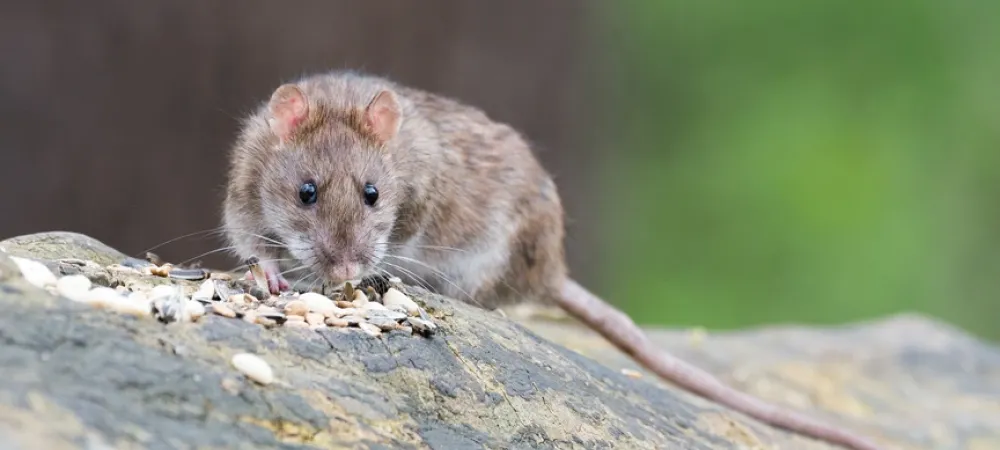
The Norway rat is the largest rodent that commonly takes up residence in and around Colorado homes. The Montana Department of Agriculture describes the Norway rat as a stocky rodent about 16 inches long, body and tail combined, weighing 12 to 16 ounces. The City of Boulder describes Norway rats as non-native pests found in Colorado that commonly live along creek and ditch banks and can move into developed areas. The City of Boulder also reports that the average female produces 20 or more offspring a year, with reproduction peaking in spring and fall.
8. Pine Squirrel: Colorado's Smallest Tree Squirrel
The pine squirrel, also called the chickaree, is the smallest tree squirrel in Colorado at about 14 inches long and 9 ounces, per Colorado Parks and Wildlife. Pine squirrels share the fox squirrel's reddish color but have a white ring around each eye. They live in mountain forests and are known for their loud, chattering calls.
9. House Mice and Deer Mice: Colorado's Smallest Common Rodents
House mice and deer mice are the smallest rodents on this list, and both weigh less than an ounce. An adult house mouse measures about 5 to 7 inches including a 3- to 4-inch tail and weighs about half an ounce, according to University of California IPM. Deer mice measure about 3 to 4 inches plus the tail, per the Internet Center for Wildlife Damage Management. The Colorado Department of Public Health and Environment describes deer mice as having large ears and eyes and white undersides. Mice can fit through openings as small as 1/4 inch.
Why Colorado's Smallest Rodents Cause the Biggest Problems
In Colorado, the deer mouse is a bigger health concern than any large rodent on this list. The Colorado Department of Public Health and Environment identifies deer mice as the most common way people in the state are exposed to Sin Nombre hantavirus, a serious and sometimes fatal respiratory illness. Colorado has recorded more than 120 hantavirus cases since tracking began in 1993, according to Arapahoe County citing CDPHE data, with most cases in spring and summer.
People usually get hantavirus by breathing in dust contaminated with deer mouse urine, droppings, or saliva, often while cleaning out sheds, garages, or cabins. CDPHE recommends these precautions when cleaning up after rodents:
- Open doors and windows for at least 30 minutes before cleaning a closed-up space.
- Wear rubber, latex, or vinyl gloves.
- Spray droppings, nests, and dead rodents with a bleach solution (1½ cups of household bleach per gallon of water) before wiping them up.
- Never dry sweep or vacuum rodent droppings, since that puts contaminated dust into the air.
Myth Check
Ultrasonic plug-in repellers do not solve rodent problems. The City of Boulder lists ultrasonic machines and mothballs among the approaches that are not effective for rats. What works is sealing gaps, removing food and shelter around the home, and trapping the rodents already inside.
Frequently Asked Questions About Colorado Rodents
What is the largest rodent in Colorado?
The North American beaver is the largest rodent in Colorado. Colorado Parks and Wildlife lists adults at more than three feet long and up to 55 pounds. The porcupine is second at up to 33 pounds.
Is a muskrat a baby beaver?
No. A muskrat is a separate species and is actually a large vole. Adult muskrats in Colorado weigh about 2 pounds and have a tail flattened side to side, while beavers weigh up to 55 pounds and have a broad, flat tail.
Which Colorado rodent is the biggest health risk to people?
The deer mouse is the biggest rodent health risk in Colorado. The Colorado Department of Public Health and Environment identifies deer mice as the most common source of Sin Nombre hantavirus exposure in the state, usually through dust contaminated by their urine, droppings, or saliva.
Not sure what's been chewing on things or leaving droppings in the garage? Call Wolfco Pest Control at 720-504-6570 and we'll help you figure out the right next step.
Sources
- Colorado Parks and Wildlife, Beaver
- Colorado Parks and Wildlife, Porcupine
- Colorado Parks and Wildlife, Yellow-Bellied Marmot
- Colorado Parks and Wildlife, Prairie Dogs
- Colorado Parks and Wildlife, Muskrat
- Colorado Parks and Wildlife, Tree Squirrels
- Colorado Encyclopedia, Beaver
- Colorado State Publications Library, Colorado's Small Mammals, Part I: Rodents
- City of Boulder, Safe and Effective Rat Control
- Colorado Department of Public Health and Environment, Hantavirus
- Colorado Department of Public Health and Environment, Avoid Hantavirus: Practice Prevention and Year-Round Rodent Control
- Arapahoe County, Information on Hantavirus, Resident Exposure
- Montana Department of Agriculture, Controlling Rats Around Structures
- University of California IPM, House Mouse
- Internet Center for Wildlife Damage Management, Deer and White-Footed Mice